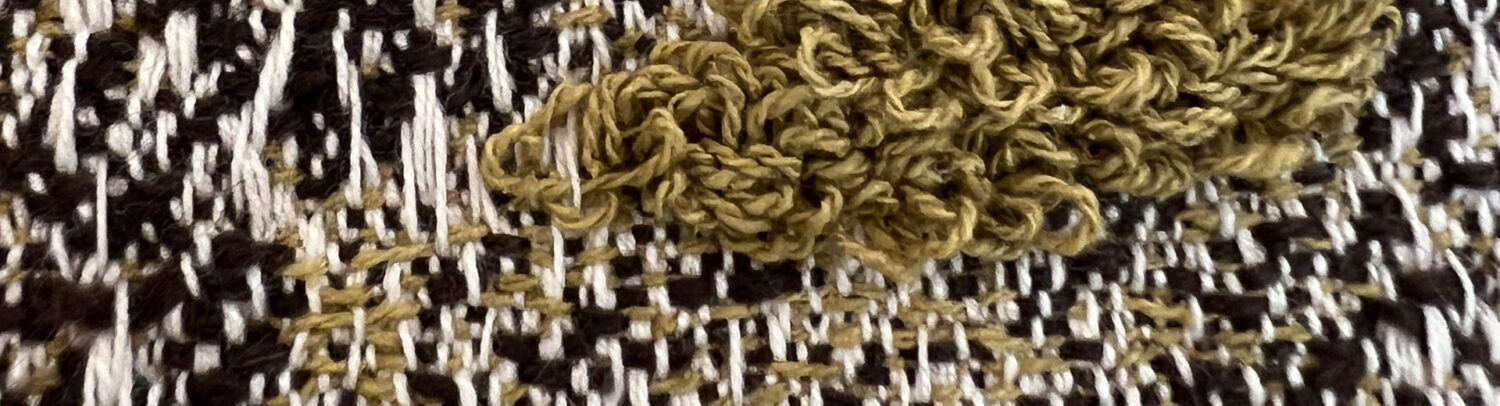
Central to her practice is weaving, which she engages both as a technical process and as a contemplative method for exploring relationships between material, time, and social responsibility. Her work frequently critiques systems of overconsumption and waste while proposing craft-based alternatives rooted in reciprocity and sustainable making. Through natural dye, embroidery, and handwoven structures, Stoker constructs pieces that call attention to the value of slowness, tactility, and ecological awareness.
Stoker holds a Diploma in Textile & Apparel Design from the College of the North Atlantic, a BFA from NSCAD University, and a Post-Secondary Instructor’s Certificate from Memorial University of Newfoundland. She is currently an MFA candidate at the Grenfell Campus of Memorial University, where her research investigates how fibre practice can serve as a site for community connection, environmental resilience, and cultural continuity. She also teaches full-time in the Textile & Apparel Design program at the College of the North Atlantic, where she mentors emerging makers and fosters inclusive learning environments.
Her practice is deeply rooted in place, shaped by close attention to the textures, rhythms, and patterns of nature. She sources many of her natural dye materials from local landscapes, working through processes that honour the slow, cyclical timelines of natural gathering and transformation. Through this sustained relationship with land and ecology, her practice becomes a means of resistance, engagement, and appreciation to those who came before her and those who will remain after. The results are works of quiet power, mindful statements, and material authenticity.
Stoker’s work has been featured in exhibitions across the province and country and has been recognized for its thoughtful engagement with environmental ethics and contemporary craft discourse. Her pieces often combine woven elements, natural pigments, and meticulously crafted details that reflect her commitment to sustainability and care-based artistic practice.
Whether through handwoven textiles or embroidered surfaces, Stoker constructs objects that ask viewers to reconsider the value of handmade labour and the cultural significance of fibre traditions. Her work contributes to ongoing conversations about gendered labour, material lineage, and the politics of craft in a consumer-driven world.
Within The Power of Objects, Stoker’s work underscores how fibre-based practices can hold and transmit stories of care, ecology, and everyday resilience. Her handwoven pieces highlight that crafted objects are agents of personal experiences, holders of cultural memory, and promoters of ethical intention. Through her integration of sustainable materials and thoughtful processes, Stoker presents in tangible form the asseveration that objects created with intention become carriers of identity, connection, and hope.