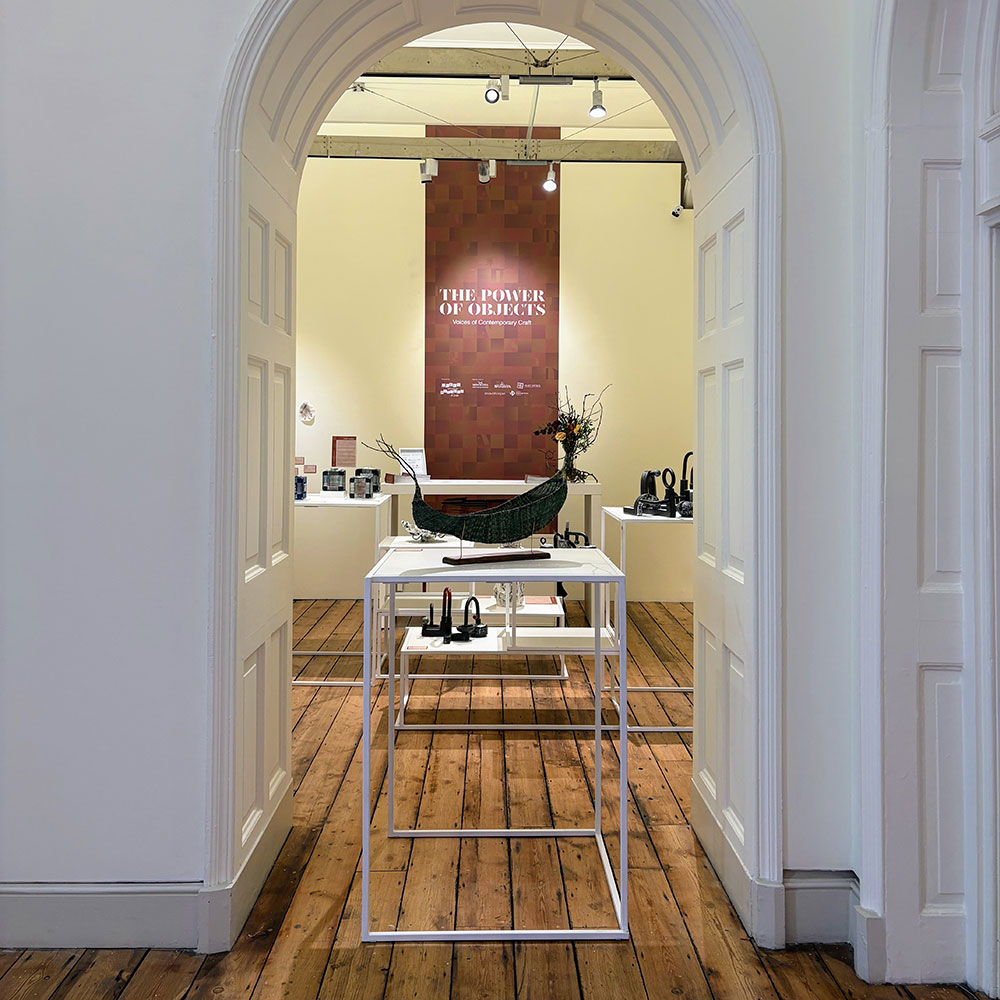
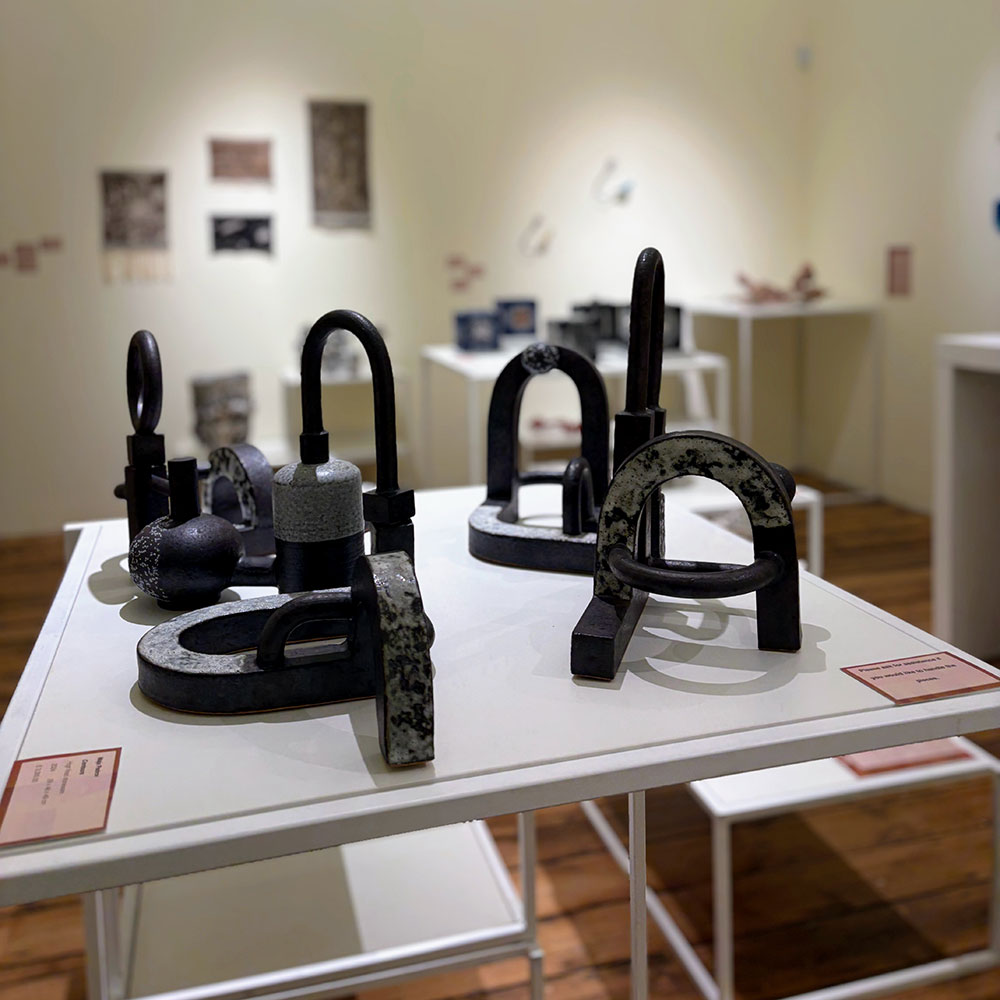
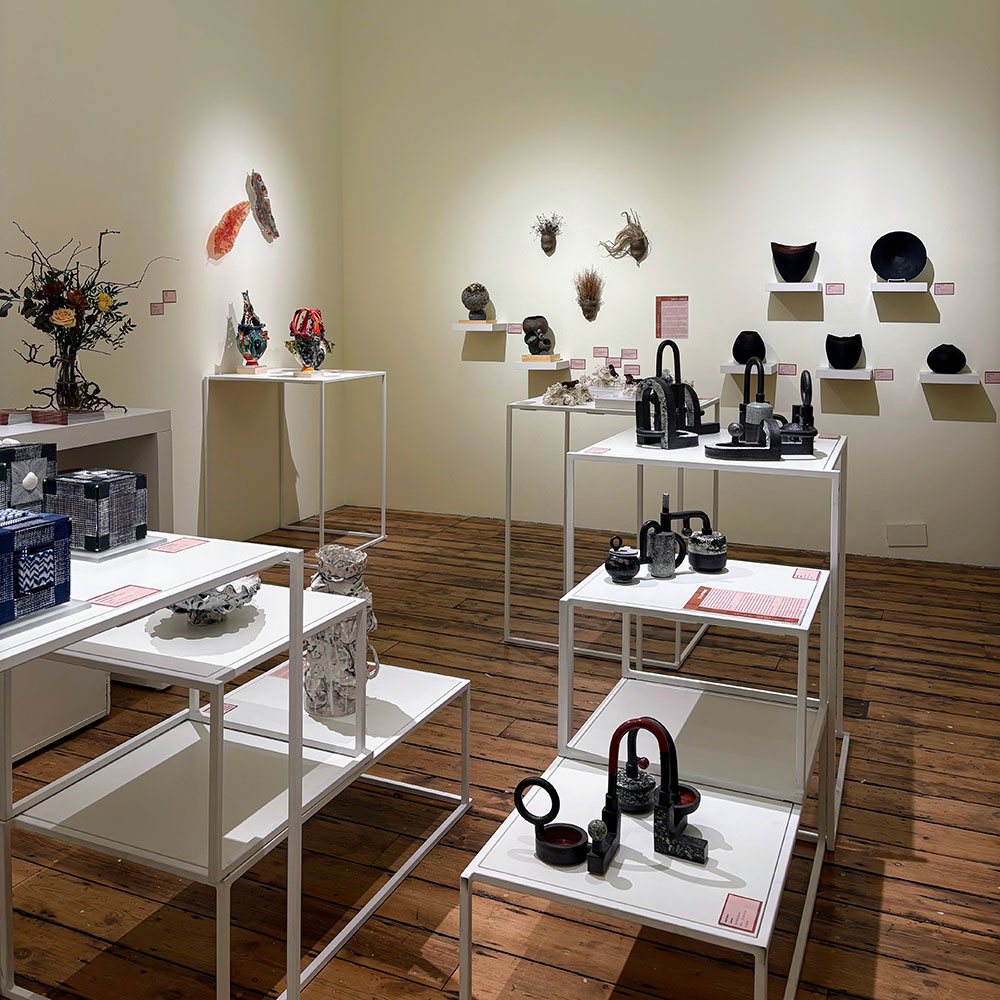
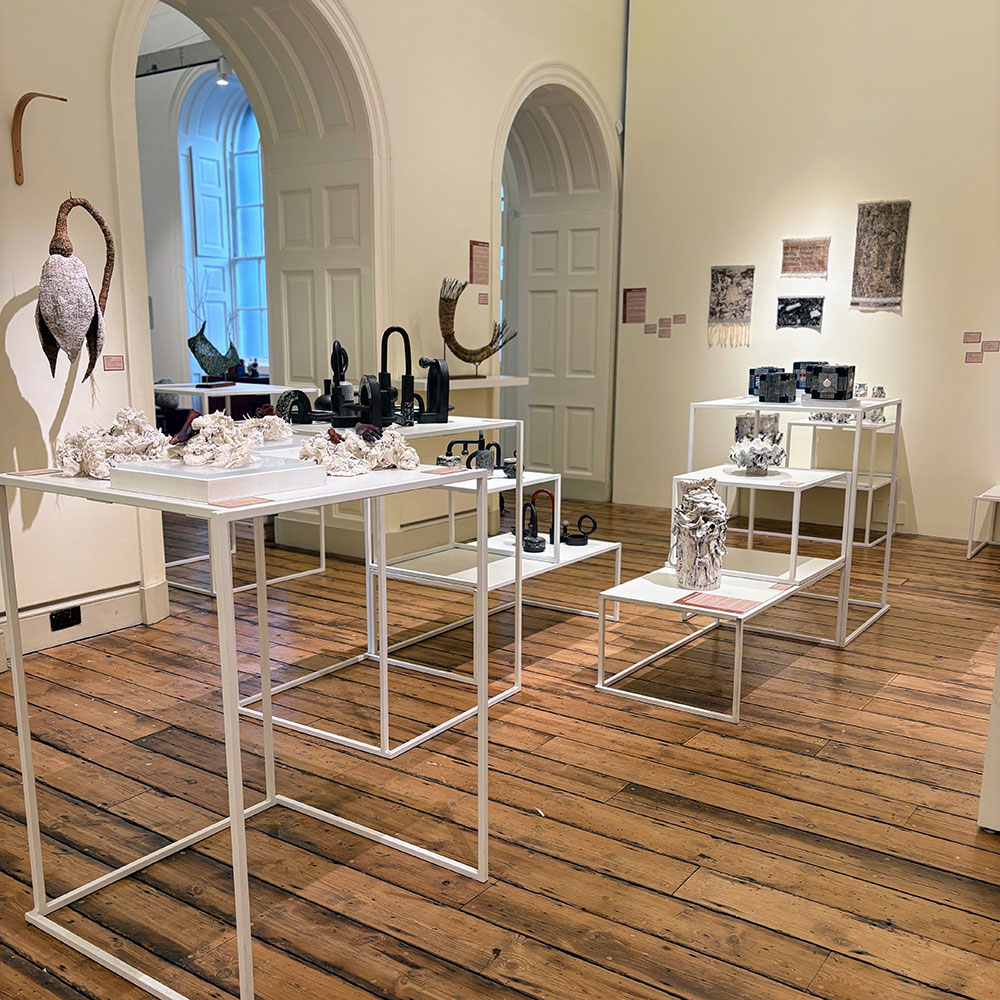
The power of craft objects exists in the duality of their nature: they are at once universal and deeply personal, capable of crossing borders while remaining anchored in the specificity of culture, place, and time. These handmade pieces become material witnesses of space in time, embodying traditions, participating in local customs, and telling stories. In their fibers and clay, we find the impressions of one’s inherited knowledge; in their patterns and textures, the echoes of the community where it was made; and in their forms, the resilience of creativity and the expression of the inner world of its maker.
Craft objects carry in them more than pure aesthetic or functionality, contemporary makers use their materials and forms as political statements, as instruments of social change, as tools of transformation and manifestation of hopes for a better future. History has shown us the power of craft objects, the Chilean Arpilleras, the AIDS Memorial Quilts, “whether it’s the suffragettes using sashes and banners to march for women’s rights, the abolitionists using quilts to guide enslaved people to freedom, or modern-day craftivists knitting for peace, crafting has served as a vehicle for both protest and survival. These examples underscore the versatility of craft as a method of resistance—blending creativity with defiance, art with activism, and tradition with innovation.”1
In Atlantic Canada, craft artists are redefining what it means to create with intention. Their work draws from a rich spectrum of lived experiences: from traditional Indigenous knowledge systems and rural worldviews to queer narratives and diasporic connections to ancestral homelands. These artists weave personal and collective histories into their objects, offering insight into cultural identities, critiques of dominant narratives, and reflections on belonging. Whether confronting colonial legacies, celebrating underrepresented voices, or envisioning alternative futures, their practices illuminate the powerful role of craft in shaping a more inclusive and reflective society.
Through their hands, these artists are reinventing their craft through the demarginalization of “craft” as a lesser art, entrusting their mediums and forms with the highest skill and thoughts, and maintaining a rich sense of history and community through tradition and innovation in their pieces. “Hands are involved in the modes of knowing […] they possess their own knowledge and skill”2. The making of craft objects, for Atlantic Canadian artists, is ritualistic and embedded with the region’s history, stories and landscape; the objects created share the voice of their makers and their communities, presenting and amplifying the rich cultural background of the region to a world stage.
The craft objects created by these makers carry within them more than aesthetic intention or functional purpose, they are overflowed with meaning, agency, and vision. These contemporary artists are harnessing the material language of craft not only to reflect their world but to challenge and reshape it. Through clay, fiber, metal, wood, glass and several other mediums, craft artists engage with urgent political and social themes, transforming traditional practices into acts of resistance, reclamation, and hope. These works are not just beautiful or useful; they are bold declarations, statements of identity, resilience, and a deep longing for a more just and compassionate future.
Curating in the context of Craft is unique, beautiful and challenging. It is intrinsically tactile and community and narrative-oriented, rooted in materials, mediums, process and place. It involves careful considerations and aims to amplify voices that have historically been underrepresented in mainstream art spaces narratives and finding meaning in materials, stories, cultures and skills that might otherwise go unnoticed.
This exhibition aims to do that. It embraces craft as a vital language that communicates beyond words. It is a way of holding space for others. It is a means of connecting makers, audiences, and communities from both sides of the Atlantic through shared values and collective inquiry. It asks viewers to consider how objects shape our understanding of history and how, in the hands of contemporary makers, they continue to challenge, affirm, and transform the present.
The artists represented here are not merely preserving practices, they are expanding them, reinterpreting materials and methods to reflect the complexities of today’s world. In doing so, they remind us that craft is not static. It is a living and breathing language, powerfully responsive; an enduring force in shaping who we are, how we connect, and how we imagine what comes next.
– Bruno Vinhas, Curator
1 Crafting Resistance: How Handmade Art and Objects Have Shaped Movements. Albion Gould, 2025
2 The Making of Many Hands: Artisanal Production and Neighborhood Redevelopment in Contemporary Socially Engaged Art. Brynjolfsson, Noni. in The New Politics of the Handmade, Black | Burisch. 2021